Why Foreign Founders Need Multiple US Bank Accounts (Before Yours Gets Frozen)

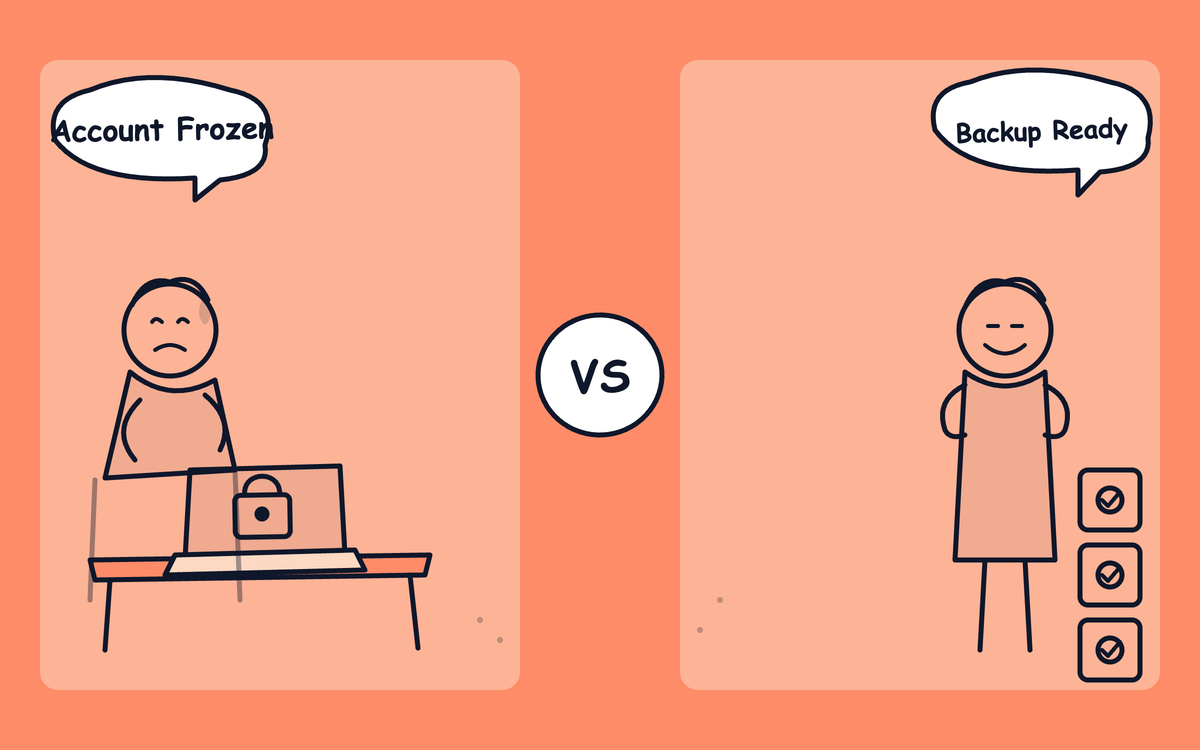
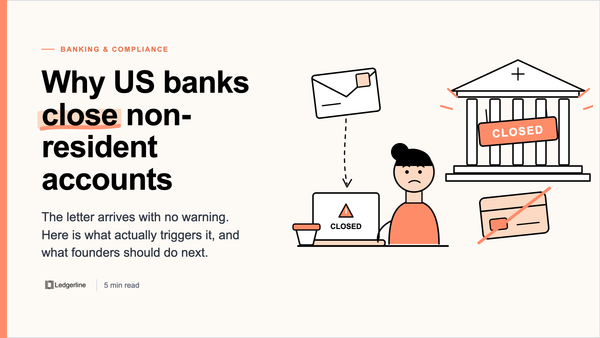
One of the fastest ways for a foreign founder's US business to grind to a halt is a bank account freeze. No warning, no explanation, just an email that says your account is "under review." If you have all your money and payment rails in one bank, one freeze can lock you out for 30 to 90 days or maybe forever.
In this blog, we'll break down why one US bank account is a business continuity risk for every foreign-owned US business, the exact triggers that get accounts frozen, and simple steps to build a resilient banking setup before you need it.
Why One US Bank Account Isn't Enough
If you're running a foreign-owned US entity (LLC, C-Corp, or otherwise) with a single bank account, you're building your business on a single point of failure. And banks freeze accounts far more often than most founders realize.
In fiscal year 2019 alone, more than 20 million Bank Secrecy Act reports were filed by over 97,000 US financial institutions. That's the compliance machinery running in the background of every US account. Some of those reports are Suspicious Activity Reports (SARs), which banks file when transaction patterns look unusual. And under the Bank Secrecy Act, banks must file a SAR for any transaction of $5,000 or more that they suspect is out of pattern. Even if the transaction is completely legal.
Once your account is flagged, the review window is usually 30 to 90 days. Some go longer. During that time, you can't send wires, can't run payroll, can't accept incoming payments to that account. If you have exactly one bank, your business is functionally frozen alongside it.
Foreign-owned US entities carry an extra layer of scrutiny that domestic businesses don't face in the same way. Which means the margin for error is smaller.
What Actually Triggers a Bank Account Freeze
Banks rarely tell you why they froze your account. But the pattern of triggers is consistent across Mercury, Relay, Wise, Chase, and Bank of America. In simple words, banks are running risk models. When your profile crosses a threshold, the algorithm closes the door before anyone at the bank has a conversation with you.
The most common triggers for foreign-owned US businesses:
- International wire patterns. Multiple incoming wires from different countries in a short window. Even when every wire is legitimate revenue, the pattern looks like layering to a compliance algorithm.
- Transactions with high-risk jurisdictions. Countries on OFAC lists or elevated AML watchlists trigger reviews. This includes routine business payments to suppliers in flagged countries.
- Address mismatch. Your entity has a US registered agent address, but you're logging in from a different country every day. Banks see the geolocation gap.
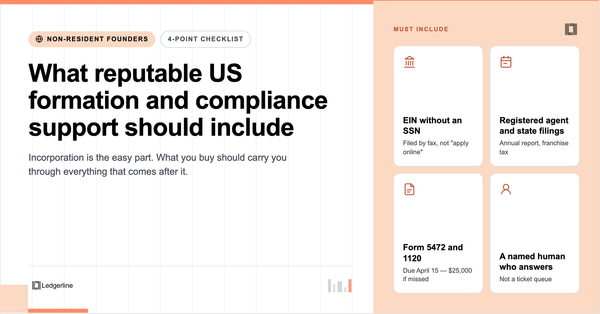
- Formation document gaps. Under the FinCEN Customer Due Diligence (CDD) Rule, banks must identify and verify each beneficial owner (generally each 25%+ owner plus one control person). If your operating agreement or corporate bylaws don't clearly name owners, directors, managers, and authorized signers, the account application stalls or the existing account gets flagged for re-review. (Foreign-owned single-member LLCs and 25%-foreign-owned US corporations also carry a separate IRS reporting obligation via Form 5472, which is where many foreign founders first encounter beneficial ownership disclosure.)
- Unexplained transaction spikes. Volume doubles month-over-month with no context on file? That's a review trigger, even if it's just a good sales month.
- Chargeback ratios above 1%. Not the bank's rule directly. This is the Visa VAMP threshold. When it trips, your payment processor freezes first, then your bank often follows.
None of these mean you did anything wrong. They mean your profile tipped past a threshold. And banks are not built to explain themselves.
Picture This: Your Payroll Is Locked
It's the last week of the month. Payroll runs Friday. Wednesday morning you open your Mercury dashboard and every transaction is greyed out. "Account under review." You email support. You get an auto-reply. You get a real reply four days later asking for six documents. You send them. Ten days later, you get a follow-up asking for three more.
You are now on day fifteen. Payroll ran Friday, which was a week ago. Your team is asking what's going on. Your CFO is asking what's going on. Your one US bank account is holding all of it (the operating cash, the tax reserve, the vendor payments due next week), and you can't move a single dollar out.
This is not a hypothetical. It's the modal failure mode for foreign-owned US businesses running on one bank. And it's completely preventable.
What If You Only Have Low Volume?
A common objection: "My business is small. I don't do international wires. I don't have chargebacks. Why would my account get frozen?"
The honest answer: low volume doesn't protect you. It sometimes makes you a bigger target. In simpler words, banks run pattern-matching on every account, and inactive accounts with sudden activity often flag faster than steady high-volume ones.
Add to that the ongoing beneficial ownership verification requirement. Banks periodically re-verify who owns the entity. If your ownership structure changed and you didn't proactively update the bank, that's a re-review trigger by itself.
A low-volume account doesn't mean a low-risk account. It just means the freeze is more surprising when it happens.
How to Set Up Multiple US Bank Accounts (Without the Hassle)
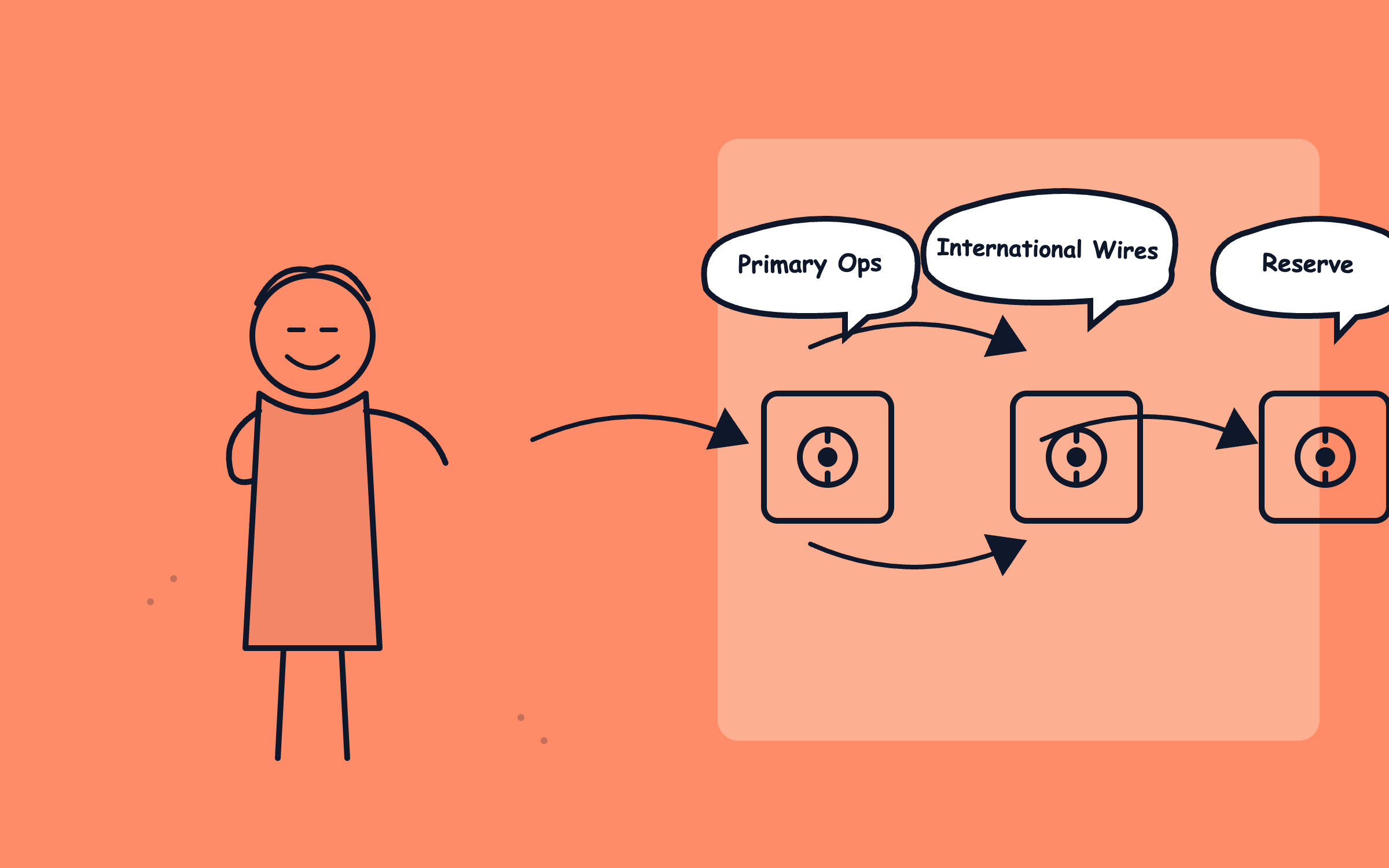
Here are the steps that work for most foreign-owned US businesses. This is the setup we recommend to our clients on day one.
- Get your primary account first. This is the hardest one to open. Most foreign founders open with Mercury or Relay because they support remote onboarding for non-US residents. If you haven't yet incorporated, our step-by-step guide to registering a US company from India covers the entity-side steps that precede this. Focus your first attempt on getting one solid account with a clean formation packet: operating agreement naming manager and beneficial owners, EIN confirmation letter, signatory resolutions, and a short business plan. Once one account is open, the second and third become dramatically easier.
- Add a second account backed by a different underlying bank. Mercury and Relay are fintech platforms, not banks. They sit on top of different underlying banks (Choice Financial, Thread Bank, and others). If Mercury's underlying bank freezes you, you don't want your backup to sit on the same infrastructure. Ask each provider which bank they use, and pick a second provider on a different rail.
- Segment by transaction type. Keep your primary account for domestic operations (payroll, US vendors, subscriptions). Route international wires and higher-risk transactions through a separate account that's underwritten for cross-border activity. Keep a third account, if you can, for reserve funds. Money you don't touch operationally.
- Keep balances distributed, not concentrated. The most common mistake is opening a second account and then leaving 95% of your cash in the first one. If the first freezes, you're still functionally frozen. A workable rule of thumb: no single account holds more than 60% of your operating cash.
- Match documentation across every system. Your entity formation documents, EIN application, business address, and every bank application should list identical information. Address mismatches are one of the fastest ways to trigger a re-review. If anything changes (ownership, address, business model), update every bank proactively. Don't wait for them to ask.
Conclusion:
Foreign-owned US entities don't get frozen because they did something wrong. They get frozen because they crossed a threshold on a risk model that no one at the bank has time to explain to them. The founders who avoid the pain aren't the ones with perfect records. They're the ones whose banking setup didn't collapse when one account went under review.
You would anyway want to spend your time building your business rather than waiting on compliance emails. Multiple accounts, distributed balances, clean matching documentation. That's the whole framework. Doing it right today is less work than fixing it later.
Ready to Get Your Foreign-Owned US Business's Banking Right?
If you need help setting up your first US business bank account, choosing the right combination of providers for your business model, or cleaning up documentation that keeps getting flagged, we're here to help.
Get in touch with Ledgerline. We work with foreign founders every day on exactly this.
Frequently Asked Questions
How many US bank accounts should a foreign founder have? Most foreign-owned US businesses are best served by 2 to 3 US bank accounts on different underlying banks. One primary for domestic operations, one for international wires and higher-risk transactions, and a third for reserve funds if the business volume justifies it.
Can a foreign founder open multiple US business bank accounts? Yes. There's no legal cap on the number of US business bank accounts a foreign-owned US business can hold. Each account has its own onboarding process, and the second account is usually easier to open than the first because you have a track record with a US bank to reference.
Why did my US business bank account get frozen? Most freezes trace to one of six triggers: international wire patterns, transactions with high-risk countries, address or geolocation mismatches, gaps in beneficial ownership documentation under the FinCEN CDD Rule, unexplained transaction spikes, or chargeback ratios above 1%. Banks are rarely required to tell you which one triggered the review.
How long does a bank account freeze usually last? Most reviews take 30 to 90 days from the initial freeze notice. Some resolve in under a week when documentation is complete and consistent. Some take longer, especially when the bank is coordinating with FinCEN or another agency.
Is Mercury a bank? No. Mercury is a fintech platform that partners with underlying FDIC-insured banks (historically Choice Financial and Evolve Bank & Trust, among others). The same is true of Relay, Wise Business, and most fintech offerings foreign founders use. Your money is held at the underlying bank, but your customer relationship is with the fintech.