Why US Banks Close Non-Resident Accounts (And What Founders Should Do)

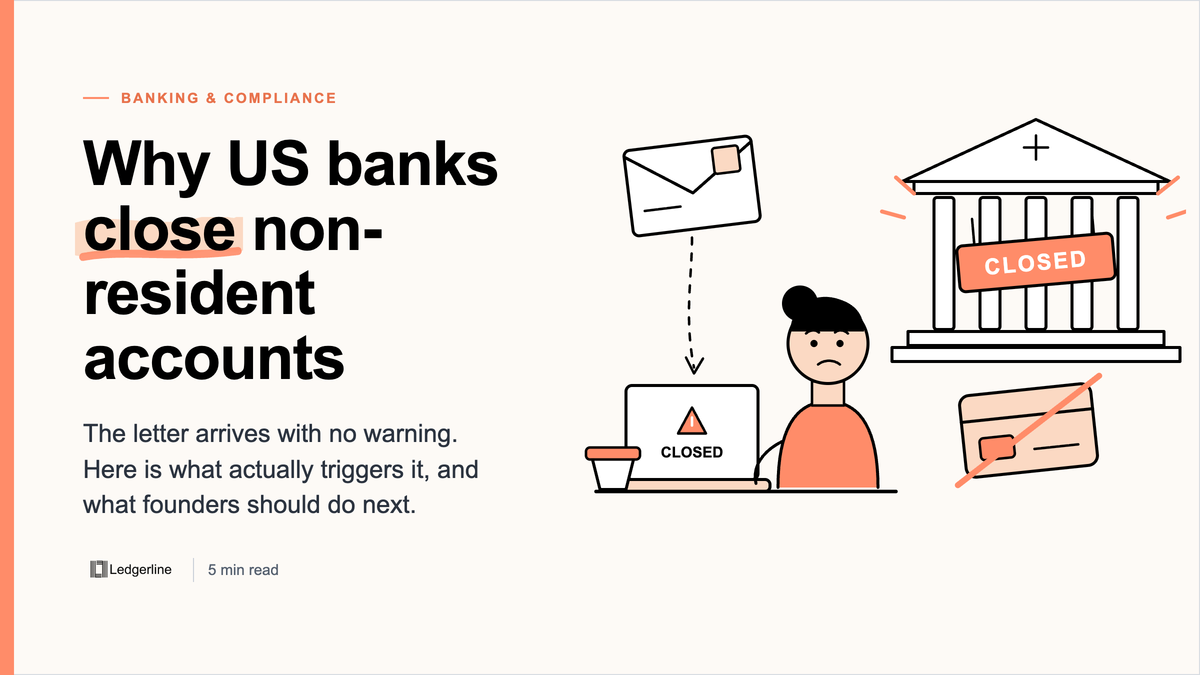
“The account was working fine. Then it was gone.”
We hear some version of this every week from international founders. No long explanation. No long runway. Just a closure notice, and suddenly payroll, vendors, taxes, and customer receipts all sit behind one decision you did not see coming.
U.S. banks and fintech banking partners close some non-resident accounts because cross-border relationships can become harder to monitor, document, and defend. For international, startup, and crypto founders, the practical lesson is simple: a U.S. account should not be the company’s entire financial plan.
This is not legal or banking advice. It is a practical guide to why closures happen and what you can do before one hits.
Why do non-resident accounts attract more scrutiny?
A non-resident founder may run a U.S. company while living and managing the business elsewhere. That can make the banking relationship more complex than a domestic account. The bank may need to understand:
- who owns the company
- where the business operates
- what the company actually does
- why money moves in and out of the account
- whether activity still matches what was described at onboarding
Complexity does not automatically mean wrongdoing. It does mean the bank has to keep a clear view of the relationship. If that view becomes incomplete, outdated, or hard to verify, the bank may decide the compliance burden is not worth keeping the account.
In simpler words: if the bank cannot explain your business cleanly to its own risk team, you are easier to exit.
Why do closures feel like they happen “without warning”?
Account closures often feel sudden because the bank’s internal review is not visible to you. A bank may ask for documents, review activity, or reassess risk without walking you through every factor. You may only see the last step: a short deadline to move funds and close out.
That is a real operating problem. Banking access supports payroll, vendor payments, tax payments, customer receipts, and other basic company functions. When the account closes, the damage is not “inconvenient email.” It can stop the company from operating while you figure out what happened and where money goes next.
When is the risk higher?
Some businesses are easy for a bank to classify. Others stack risk signals:
- international ownership
- U.S. incorporation with overseas management
- crypto or digital assets
- multiple currencies
- rapid growth
- payments across several jurisdictions
Crypto companies can face extra scrutiny because the bank needs a clear story on activities and the source and purpose of funds.
The issue is not that a complicated business cannot bank in the U.S. The issue is that you need consistent records and a defensible explanation of the business. Helpful pieces of that picture include:
- incorporation and ownership documents
- bookkeeping and reconciliations
- tax filings completed on time
- information filings when they apply
- state filings and renewals that keep the company in good standing
- transaction documentation and management reporting
Still tempted to treat compliance as “later”? Picture this: the bank asks for an updated ownership chart, proof of business activity, and an explanation of three inbound wires. Your books are three months behind, a state filing is late, and last year’s tax package is unfinished. That is how a review turns into a closure race.
What should founders do before a bank closes the account?
1. Treat banking continuity as a finance responsibility
Keep company, owner, and transaction records organized so you can answer questions without rebuilding the business under pressure. Separate personal and business finances. Mixed accounts make every review harder.
2. Do not rely on one account for every critical payment
A backup relationship cannot eliminate banking risk. It can reduce the chance that one decision stops payroll, taxes, or key vendor payments.
3. Make accounting match how the business actually operates
For international and crypto founders, that may include cross-border activity, onchain transactions, multiple entities, or changing revenue and expense patterns. Records should make sense to a reviewer who was not there when the money moved.
4. Stay current on filings, taxes, and good standing
Banking trust is easier to defend when the company looks current:
- file taxes on time
- complete required information filings when they apply
- keep registered agent and state obligations current
- keep the company in good standing
A bank may never ask for every filing by name. Late or missing obligations still make the company harder to explain when scrutiny starts.
5. Get help before you are under review
A partner that connects incorporation, compliance, accounting, tax, and finance leadership can help align the legal structure with the financial records and operating reality. That is more useful than treating each document or deadline as a separate task.
Can preparation stop a bank from closing your account?
No preparation can guarantee that a bank will keep an account open. Banks set their own risk appetite, and de-risking (exiting a category of customers rather than managing every case one by one) does happen.
The opposite view, that closures are mainly arbitrary and preparation cannot help, would be stronger if banks routinely closed well-documented accounts with clear, current records and no unresolved questions. It would also be stronger if founders had no way to keep backup rails or improve the clarity of their financial information.
Even then, the useful goal is narrower: reduce operational exposure. Make the business legible. Keep records current. File taxes and entity obligations on time. Stay in good standing. Plan a replacement account before you need one.
Bottom line for international founders
Build banking redundancy. Treat compliance-quality financial records as part of business continuity. A U.S. bank account is useful infrastructure. It should not be the company’s entire plan.
Have a question about your setup? Ledgerline can help you connect formation, banking assistance, filings, books, and tax deadlines so your company stays easier to explain when a bank asks.
FAQ
Why do US banks close non-resident accounts?
Usually because the bank can no longer comfortably monitor, document, or defend the relationship. Common pressure points include outdated information, activity that no longer matches the stated business, cross-border complexity, and internal de-risking decisions.
Can a US bank close my account without explaining why?
Often yes from the customer’s point of view. Banks may give limited detail, and the internal review process is usually not fully visible. Always read the notice for deadlines and fund-return instructions.
What should I do if my non-resident LLC bank account is closed?
Download statements and documents immediately, move critical payments to a backup rail if you have one, respond to any remaining document requests, and make sure ownership, books, and filings are current before you apply elsewhere.
Does keeping taxes and state filings current help with banking?
It can. Timely taxes, required information filings, and good standing do not guarantee an open account. They do make the company easier to explain and defend during reviews.
Should crypto founders worry more about US business banking?
Crypto and digital-asset activity can invite extra questions about source of funds and business purpose. Clear records, reconciliations, and a consistent business description matter even more.